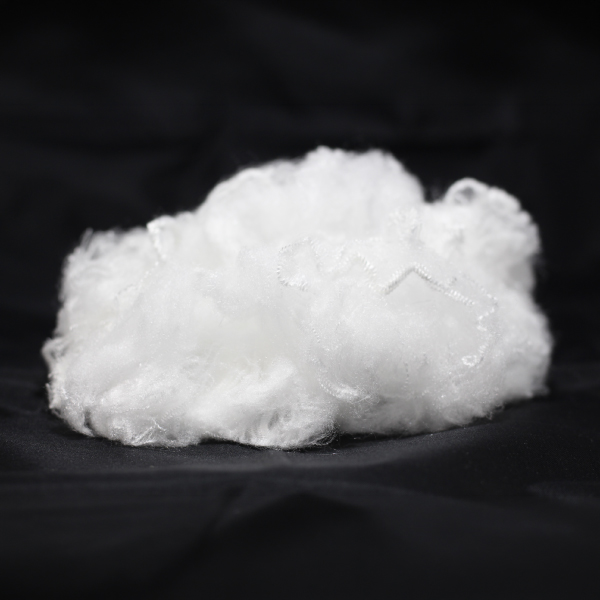
In the asphalt industry, we measure success by consistency and uptime. The baghouse is the “heart” of your plant; if it’s struggling, your production numbers drop, your fuel costs rise, and your entire operation slows down.
For decades, standard Nomex™ (Meta-Aramid) felt has been the baseline for handling the heat of asphalt plant. It’s tough, it doesn’t melt, and it gets the job done. But as the industry shifts toward higher percentages of Reclaimed Asphalt Pavement (RAP) and stricter emission limits, “standard” isn’t always enough anymore.
By understanding the material science behind modern fiber upgrades—specifically Microdenier and Duo-Density construction—plant operators can better manage differential pressure and extend the service life of their equipment without the need for high-maintenance membranes.
Before we look at upgrades, it’s important to understand why we use Aramid in the first place. Asphalt production generates exhaust temperatures that hover around 400°F (204°C), with occasional surges up to 572°F (300°C) if a burner acts up.
Standard polyester bags melt at these temperatures. Aramid fibers, however, are inherently flame-resistant and thermally stable. They don’t just withstand the heat; they maintain their strength while doing it. This prevents “bag drop” or catastrophic tearing during the thousands of cleaning pulses they endure.
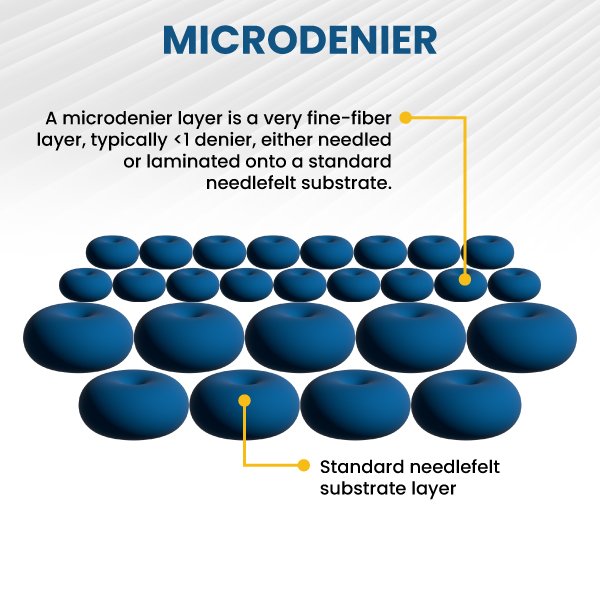
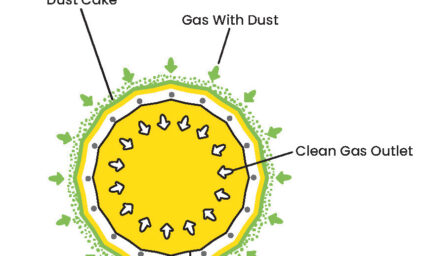
If you are fighting high differential pressure (ΔP), the issue might be how your bags catch dust. Standard felt captures dust inside the depth of the fabric. Over time, fine particles get trapped deep in the fibers, choking off airflow.
Microdenier fibers change the game by changing the fiber density. These fibers are significantly thinner than standard ones, allowing manufacturers to pack more fibers into the same space. This creates a denser, tighter surface on the bag.
Instead of trapping dust deep inside, Microdenier bags catch dust on the surface. When your pulse-jet system fires, the dust cake ejects cleanly because it hasn’t keyed into the felt. It’s like the difference between cleaning mud off a screen door versus cleaning it out of a thick carpet.
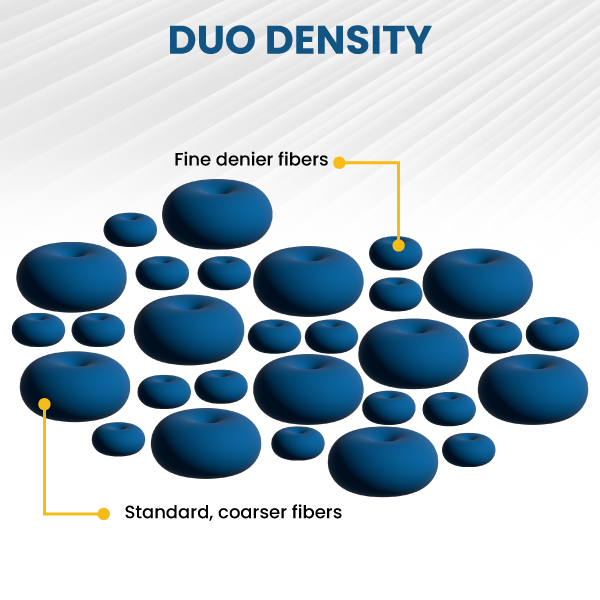
You don’t have to choose between strength and filtration efficiency. Duo-Density bags offer a “two-in-one” solution engineered specifically for this industry.
This setup gives you the high-efficiency cleaning of a premium bag with the rugged durability of a standard felt.
High-RAP mixes are great for the bottom line, but they introduce a specific headache for the baghouse: blue smoke and sticky vapors. Reheating old pavement releases hydrocarbons and oily vapors that act like glue.
If these vapors condense on your bags, they bind the dust to the fiber. No amount of pulsing will knock that sludge loose. This is where chemical engineering comes in.
For plants running high RAP, we recommend Oleophobic (oil-repellent) treatments. Think of this like waxing a car. When oily vapors hit an oleophobic bag, they bead up rather than soaking in. This keeps the “glue” from setting, allowing your bags to pulse clean even when the mix gets heavy.
Heat makes fibers brittle, but moisture makes them weak. In an asphalt plant, you are constantly driving moisture out of the rock, sending steam straight to the baghouse.
If your baghouse temperature drops too low—specifically near the “dew point”—that moisture condenses. When water combines with the sulfur in the fuel or the alkalinity in limestone dust, it attacks the Aramid fibers chemically. This is called Hydrolysis (or “bag rot”). The bags turn mushy and lose all strength.
To shield against this, look for bags with PTFE impregnation. This process coats every individual fiber with a fluoropolymer shield, protecting the core of the fiber from chemical attack and moisture absorption.
With high airflow and flammable dust (a combination of fine aggregates, bitumen vapors, and carbon char), the risk of fire is real. In large permanent plants, running high percentages of RAP and recycled materials, the modern ‘best practice’ protection relies on infrared spark detection. These systems use sensors mounted in the ductwork to spot sparks moving at high velocity before they reach the baghouse.
Once a spark is detected, the system triggers a split-second water spray to extinguish the ember without soaking your bags. It’s a critical layer of safety that protects your premium filter media from catastrophic damage.
In hot mix asphalt operations, pre-coating your filter bags really does help. Fresh, clean felt is porous and vulnerable. If you hit new bags immediately with hydrocarbon-laden RAP exhaust, you can blind them before they’ve filtered a single ton of rock.
That’s why applying a neutral precoat powder during startup is so important. Clean felt needs time to build up a stable dust cake, but in hot mix asphalt environments, you don’t have the luxury of waiting through multiple cycles. A precoat creates an immediate, protective buffer on the surface of the new bags; a lightweight, porous layer that shields the fabric from direct exposure to hydrocarbons and sticky fines. This sacrificial coating absorbs moisture and oils, prevents early blinding, and helps establish a healthier filtration layer from the very first minutes of operation. The result is more stable differential pressure, cleaner air, and significantly longer filter life compared to running without a precoat.
In the high-stakes environment of an asphalt plant, “standard” filtration is often a false economy. By upgrading to Microdenier or Duo-Density Aramid, and protecting that investment with the right chemical treatments and pre-coating procedures, you stop fighting your baghouse and start trusting it.